More ads
01
More spend will not fix weak source quality.
If the wrong enquiries are coming in, more budget only feeds the same low-intent path.
When the real constraint is unclear, service businesses often spend more, buy another tool, blame staff, discount, or push harder on sales. If the bottleneck sits elsewhere, that effort leaks time and budget instead of becoming a useful weekly signal for the monthly decision.
If the wrong enquiries are coming in, more budget only feeds the same low-intent path.
CRM, automation, and reporting only help after the team knows which stage is actually blocking revenue.
If quotes are going cold, payment is slipping, or repeat revenue is weak, a louder sales push is not the answer.
Price cuts do not solve unclear offers, weak trust signals, poor booking conversion, or missing second touches.
The stage most likely limiting revenue this month.
A plain estimate of the opportunity sitting inside the constraint.
Source notes, journey data, examples, and operating signals that support the call.
The first fix worth making before the team spends more elsewhere.
The monitor is designed to make the next decision specific: what is stuck, what evidence supports it, what it is costing, and what to fix before spending more elsewhere.
2nd Bell reviews the full path from growth spend to repeat revenue, then highlights the stage most worth fixing now.
Growth effort
Intent check
Demand signal
Speed and clarity
Next step
Fix this now
Close path
Cash movement
Return path
Example only: quote follow-up is the constraint this month. 18 quotes sent. 11 had no second touch. Estimated value affected: HK$84,000. Fix this before increasing ad spend.
The stage most likely limiting revenue this month.
A plain estimate of the opportunity sitting inside the constraint.
Source notes, journey data, examples, and operating signals that support the call.
A recurring decision product for service businesses that need to know where revenue is stuck this month, using weekly signals to decide what to fix first.
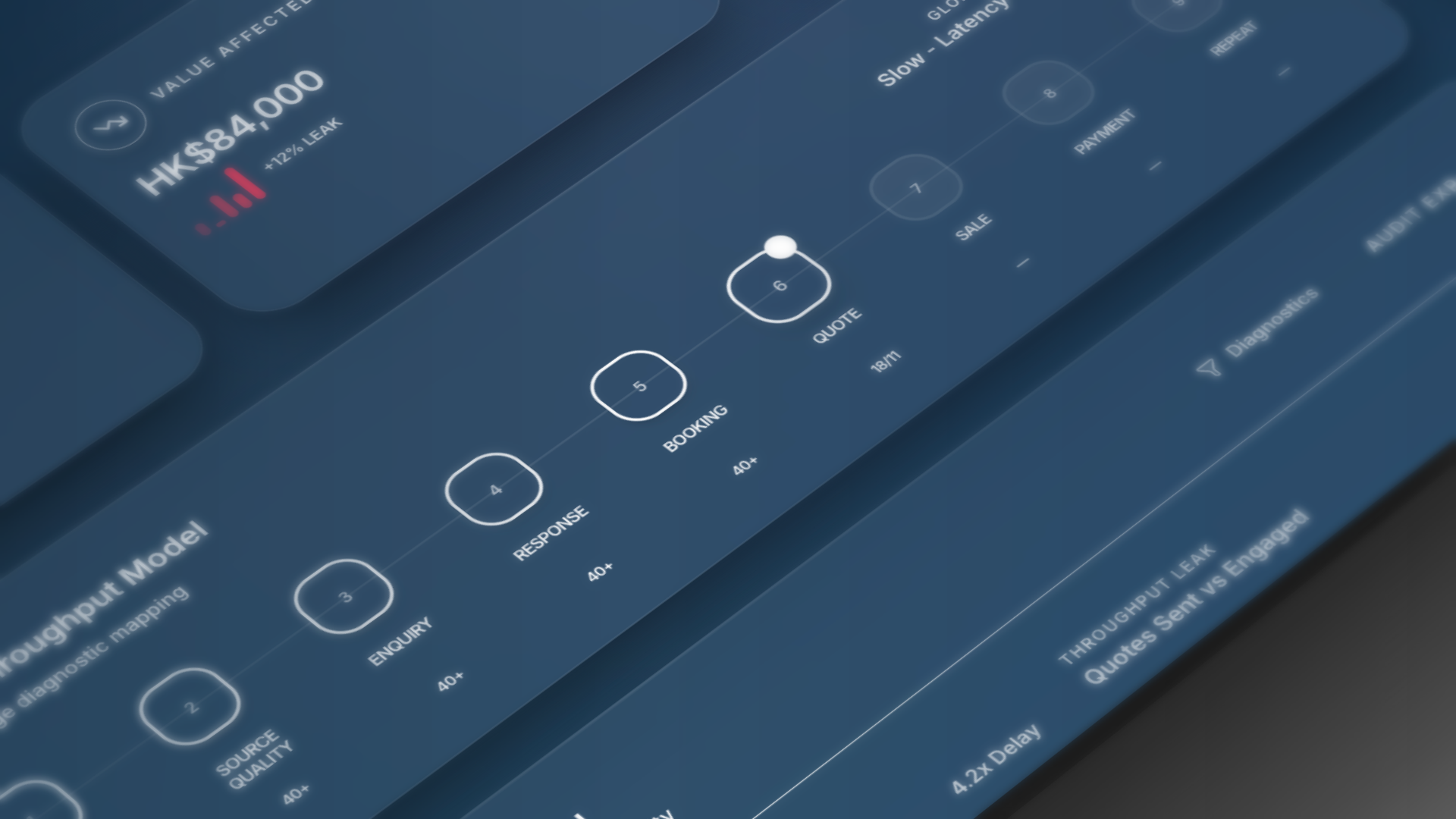
2nd Bell turns the revenue journey into one clear monthly decision: where the constraint sits, what proves it, what it may be costing, and what to fix first.
Growth spend, source quality, enquiry, response, booking, quote, sale, payment, and repeat revenue.
The stage currently causing the most commercial drag this month.
The signal behind the constraint, not a one-off dashboard readout or audit.
The revenue or opportunity value currently affected.
What to fix first, and what not to spend more on yet.
Start with a review, identify the current constraint, track the signals that matter each week, then decide what to fix first before spending more on the wrong part of the journey.
Start with a Revenue Constraint Review so we can understand the journey, confirm there is enough signal, and see whether the monitor is the right next step.
We identify whether the issue sits in source quality, offer clarity, response, booking, quote movement, payment, or repeat revenue, then follow the weekly signals that support the monthly decision.
If it is a fit, move into the Revenue Constraint Monitor and use the monthly rhythm to decide the next corrective action.
If you already have growth effort, enquiries, quotes, sales conversations, payments, or repeat opportunities, but do not know what is blocking revenue or whether there is enough signal for a monthly decision, this is usually where 2nd Bell can help.
Already generating enquiries, quotes, consultations, or repeat opportunities, but unsure which stage is holding revenue back.
Growth spend produces interest, but booking, consultation, payment, or return visits are not moving cleanly.
Demand, quotes, and jobs sit across channels, making the true constraint hard to see.
Different markets, sources, and handoffs make teams guess which revenue problem to fix first.
A few straight answers for teams trying to work out whether the problem is real, whether 2nd Bell is the right fit, and what happens next.
You need to look before and after the enquiry. The monitor checks source quality, offer clarity, intent signals, response, booking, quote movement, payment, and repeat revenue so the team stops guessing and can make the monthly decision from weekly signals.
We use the first conversation to understand your revenue journey, the symptoms you are seeing, and whether there is enough signal to make the Revenue Constraint Monitor a sensible next step.
Each monitor cycle identifies the current revenue bottleneck, estimates the value affected, shows the evidence, recommends the next corrective action, and warns what not to spend more on yet. It is built to turn weekly signals into one monthly decision.
No. Those tools may appear in the evidence, but 2nd Bell is not positioned as a CRM, WhatsApp automation tool, AI chatbot, or generic dashboard. It is a weekly-signals, monthly-decision product.
It is usually a fit for service businesses with existing growth spend, enquiry flow, quotes, sales activity, payments, or repeat revenue opportunities, but no clear view of what to fix first or whether there is enough signal for a monthly rhythm.
If the constraint is downstream, more ads may waste money. If the constraint is source quality, faster follow-up may not help. If quotes are going cold, discounts may hide the real issue. The monitor is built to make that call clearer from the signals already coming in each week.
Book a Revenue Constraint Review and find out whether the bottleneck sits in source quality, offer clarity, response, booking, quote movement, payment, or repeat revenue.